The Most Successful Small Business Ideas
Most lists of "the most successful small business ideas" are SEO articles padded with whatever sounds trendy this quarter. Pet bakery. AI prompt consulting. Drop-shipping. Mobile car wash. Nobody on the list is named. No revenue figures. No proof anyone has done it.
This one's different. The ideas below come from a study of more than 1,500 people who started a business for under $1,000 and grew it past $50,000 a year. The names are real. The numbers are real. And the patterns that made them work show up over and over.
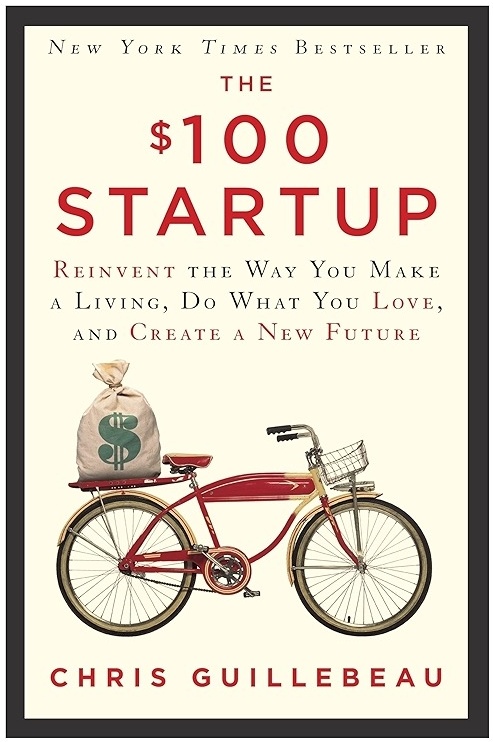
I spent three years finding these founders for The $100 Startup. The filter was simple: low startup cost, single owner or tiny team, and enough revenue to make a living. What I learned is that the most successful small business ideas aren't the cleverest ones. They're the clearest ones.
Below are the categories where I saw the most success, with real founders inside each one, plus the five traits they all shared.
The pattern behind every successful small business idea
Before the list, the pattern. Because if you understand why these worked, you can pick an idea that fits you instead of copying one that doesn't.
Every successful small business in the study sat at the intersection of two things: something the founder cared about or was good at, and something other people would pay for. In the book I call this convergence.
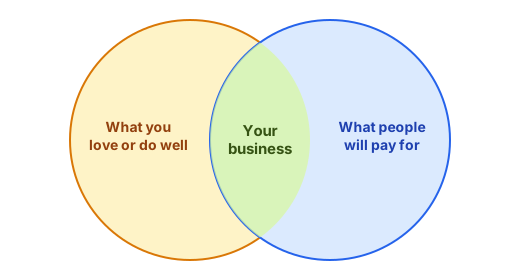
Miss one circle and you have a hobby that nobody pays for. Miss the other and you have a job you hate. The successful ideas live in the overlap.
The second pattern is skill transformation. Take what you already know how to do and apply it in a new context. A waitress named Kat Alder noticed her people skills were exactly what PR work demanded — and turned her job into a career. A piano teacher named Brandon Pearce noticed other music teachers needed scheduling software and built one. None of them learned a brand-new trade. They reframed an old one.
The third pattern is a low startup cost. The average startup investment in the study was $610. Many founders spent less than $100. When the cost to test an idea is that low, you don't need a forecast. You need to start.
1. Service businesses and consulting
The fastest path from zero to revenue. You can be operational tomorrow. There's no consulting school, no certification, no waiting for inventory to arrive.
Two rules from the book make this work. Be specific — don't be a "business consultant," be the person who helps dentists get more five-star reviews. Don't underprice — at $15 an hour, no one believes you're good. Charge at least $100 an hour and price for the result, not the time.
Charlie Pabst left his job as a store designer at Starbucks, spent $3,500 on a computer and $100 on a business license, and now earns around $100,000 a year doing the same work for himself.
Gary Leff kept his full-time CFO job and earned $75,000+ on the side helping people redeem frequent flyer miles for first-class travel. $250 per booking. He never quit the day job.
Kelly Newsome walked away from a $240,000 lawyer salary, opened Higher Ground Yoga, and earns $85,000 a year. Less money, more freedom.
2. Information products and digital downloads
Make it once, sell it many times. Information products take longer to build than services, but they scale in a way services can't. Once the file is done, every sale is close to pure profit.
Brett Kelly wrote a guide to Evernote — a notes app most people barely understood. He sold it as a PDF and earned over $120,000.
Purna Duggirala teaches Excel from India. His income went from $136,000 to over $200,000 by packaging spreadsheet knowledge into courses.
Tara Gentile started a publishing business for $80 and grew it past $75,000 a year. The investment was the cost of a few tools and a domain.
The recipe: find the thing you already know that other people are trying to learn. Capture it as a PDF, course, or video series. Set a fair price. Find a way to get paid. The eight-step version is in the $100 startup playbook.
3. Niche product and craft businesses
Hand-made, designed, or curated for a small audience that cares deeply. Margin is high because the customer isn't comparing you to a mass-market alternative.
Jen Adrion and Omar Noory made maps because they couldn't find one they liked. They pooled $500, made 50 prints, and sold out their first run in ten minutes after a design forum picked them up. Nine months later, both were full-time mapmakers.
Amy Turn Sharp invested $300 in materials to make handcrafted toys in Columbus, Ohio. Word-of-mouth carried it from there.
Megan Hunt makes wedding dresses by hand in Omaha. Her marketing plan, in her own words, is "strategic giving" — she shares knowledge, time, and connections, and the business comes back.
4. Local services and experiences
Tied to a place. Hard for the internet to copy. The bar for "successful" here is genuine livelihood, not a Series A.
Chelly Vitry built food tours in Denver for a $28 startup investment — the cost of a few permits and a website. The business grew to around $60,000 a year. What she sold was her knowledge of the local food scene, packaged into an experience.
Michael Hanna lost his corporate job, found an empty car dealership, and started delivering closeout mattresses by bicycle. Zero startup cost. He told me he'd never been happier.
Lisa Sellman built a dog-care business to $88,000 a year. No app. No franchise. A neighborhood, a calendar, and a phone.
5. Software, tools, and software-adjacent products
Not the venture-backed kind. Small software products built by one person for a niche audience that nobody else was serving.
Brandon Pearce was a piano teacher who built Music Teacher's Helper — scheduling and billing software for other music teachers. He scaled it to $30,000 a month and now lives in Costa Rica.
Chris Dunphy and Cherie Ve Ard started Technomadia, a consultancy for healthcare software, with $125. They grew it past $75,000 a year while living on the road in an RV.
You don't need to write the code yourself. You need to know the niche, the workflow, and what's broken. Hire the build if you must.
6. Teaching, workshops, and small-group programs
The most underrated category in the book. You teach what you know — in a room, on a Zoom call, or as a self-paced course — and the people who show up pay you to shorten their learning curve.
Susannah Conway started teaching photography classes in England with no startup cost at all. When asked what she didn't foresee about starting up, she said: "I didn't know I was starting up." She was sharing what she loved, and people started paying.
The bar is lower than people think. Pick a topic, pick a format, pick a price. The hardest part is admitting you know enough to teach it.
The five traits the most successful ideas share
Across all six categories, the businesses that worked had five things in common. If your idea has these, the odds are with you. If it's missing two or three, find a way to add them before you spend much.
- Low startup cost. The average in the study was $610. Most successful founders found a way to launch without borrowing, raising, or quitting. Cheap-to-start means cheap-to-learn-from.
- A clear "for whom." Not "people interested in wellness." Brides in Omaha who want a dress nobody else has. Dentists in Phoenix who need more reviews. Music teachers who hate scheduling. The narrower the audience, the easier the marketing.
- A simple way to get paid. A PayPal button. A Stripe link. A Square reader. The successful founders didn't wait for a custom checkout flow. They removed the friction between the customer's interest and the money changing hands.
- Repeat or referral built in. The strongest businesses in the study didn't depend on a constant supply of new customers. They had something that brought people back — a product good enough to talk about, a service worth booking again, an audience that opened the next email.
- An owner who chose to stay small. Almost every founder in the study had fewer than five employees on purpose. The smallness wasn't a limitation. It was the strategy.
The mistake almost everyone makes
People scan "best small business ideas" lists looking for permission. They want someone to tell them which one to pick. So they pick whichever one sounds good and then wonder why it doesn't work.
The successful founders did the opposite. They didn't ask which idea was best in the abstract. They asked which idea fit them — their skills, their location, their tolerance for risk, the audience they already had access to. The same idea that made Chelly Vitry a living in Denver would have failed in a city she didn't know. The same Excel course that made Purna Duggirala a fortune would have flopped if someone else had tried to write it.
An idea that's right for someone else isn't right for you. The ones above are useful as patterns, not prescriptions.
How to test the idea you pick
You don't need to commit before you know. The book's whole framework is built around small, cheap experiments — get a real-world signal that someone will pay before you build the thing they're paying for.
One founder I write about advertised a $900 product in a magazine before he'd written a single page of it. When two people ordered, he had thirty days to write it. He used the deposit to fund the work. That's the spirit: prove demand first, then deliver.
For the longer version, the guide on how to test your business idea walks through the exact steps.
Ready to pick one? The one-page business plan turns whichever idea you choose into a real plan in about an hour. Or if you're ready to go further, Your First Sale takes you from idea to first paying customer in 14 days.
Frequently asked questions
What makes a small business idea successful?
Convergence — the overlap between what you know and what other people will pay for. Add a low startup cost, a focused niche, and a simple way to get paid, and you have the recipe behind nearly every business in the study. The successful ideas weren't clever. They were clear.
Are most "best small business ideas" lists trustworthy?
Most of them aren't. They're SEO content padded with whatever ideas trended last quarter. The ideas on this page come from a study of more than 1,500 real businesses earning $50,000 a year or more, started for under $1,000. The examples have names attached.
Which categories had the most success?
Services and consulting were the fastest to revenue. Information products had the highest margins once they launched. Niche e-commerce and craft businesses had the strongest repeat customers. Each path suits a different temperament, and the book covers all of them.
How do I know which idea is right for me?
Start with what you already know. Skill transformation — taking what you do in one context and applying it somewhere new — was the most common starting point for founders in the study. A waitress used her people skills to launch a PR career. A piano teacher built software for other music teachers. You almost certainly already have the raw material.
Get more
Your First Sale — 14 days from idea to first sale
Day-by-day workbook with 12 fillable worksheets. One task per day, 30–60 minutes. Starts at $29.
See what's includedGet the free $100 Startup resource library
The one-page business plan, launch checklists, and promotion plan templates from the book. All free.