How to Start a Business With No Money
"How do you start a business with no money?" is one of the most-searched questions on the internet. Most of the answers are bad. They sell you a course. Or recommend a niche they don't run. Or promise a passive income system that quietly assumes you have $3,000 in ad spend lying around.
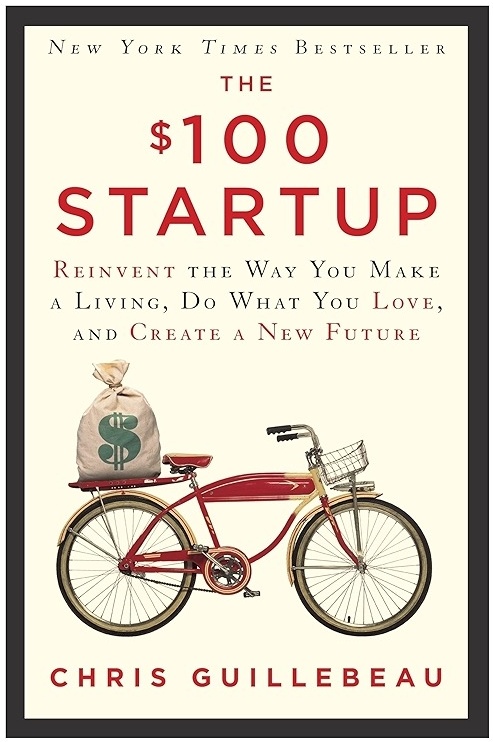
Here's the honest version. Several founders in The $100 Startup's 1,500-person study began with no money at all — not a marketing trick, an actual zero in the spend column. The paths they took are repeatable. Below is what each one looked like, plus the five things you actually need to start (none of which cost money), and the order to do them in.
For The $100 Startup, I spent three years finding people who'd started a business for under $1,000 and grown it past $50,000 a year. The average startup cost across the study was $610. But a real subset of founders spent nothing at all — and built something that paid them a livelihood.
Their starting conditions weren't magic. They had access to the same free tools and free platforms you have. What they didn't have was a reason to keep waiting.
The honest premise: "no money" isn't the real barrier
The average startup cost in the study was $610. The median was lower. Many founders spent under $100. A few spent $0. And every one of those founders had the same realization at some point: the missing ingredient wasn't capital. It was the decision to begin.
Money is what people point to when they're not ready to admit something harder. The harder admission is that you're afraid to be seen trying. That you don't trust yourself to deliver. That you'd rather keep researching than risk an actual customer saying no. Those fears don't go away when you save up $5,000. They just get more expensive.
None of which is to be flip about money. If you're broke, you're broke, and the constraint is real. But the path forward isn't "wait until you're not broke." It's "pick a path that costs nothing to start, and start."
The five things you actually need (all free)
Strip a business down to its bones and these are the only ingredients. None of them require money. All five together are the recipe behind every $0 founder in the study.
- A specific thing you can do for someone. Not a "business idea" in the abstract. A concrete service, product, or piece of knowledge that a named human would pay for. Specificity beats novelty.
- A way to get paid. A free PayPal account. A Stripe link. A Square reader you already own. Cash. The point is that money can move from a customer's pocket to yours without you needing to set up a corporation first.
- A way to be found. A free Gumroad page, a single Instagram account, a personal email signature, a free Carrd site, a flyer on a coffee-shop corkboard. One channel is enough to start.
- One customer. Not ten. Not a hundred. One person who hands you actual money. The first sale is the moment a project becomes a business, and the gap between zero customers and one is much bigger than the gap between one and ten.
- The willingness to be public about it. If nobody knows you're open for business, nobody can buy. This is the trait that separates the founders who made it from the people who kept "getting ready" indefinitely.
Notice what's not on the list: an LLC, a website with a checkout, a logo, business cards, a bank loan, an investor, a co-founder, a course, a coach, a brand consultant. You can add those later. You can also skip most of them forever.
Six paths that need zero capital
These are the actual categories the no-money founders in the study used. Each one has a real example next to it.
1. Services and consulting
The fastest path from idea to revenue. You can be operational tomorrow. No inventory, no platform fees, no waiting for production.
Two rules make this work. Be specific. Don't be a "business consultant" — be the person who helps independent dentists get more five-star reviews. Don't underprice. At $15 an hour, nobody believes you're good. Charge at least $100 an hour and price for the result, not the time.
Real example: Gary Leff kept his full-time CFO job and ran a travel-hacking consulting business on the side, charging $250 per booking to help people redeem frequent flyer miles for first-class travel. He earned $75,000+ a year from the side business and never quit the day job. Zero startup cost. The "inventory" was his own knowledge.
2. Teaching what you already know
If you know how to do something better than the average person trying to learn it, you can teach. The format doesn't matter much — a paid workshop, a private group, a coaching call, a small course. The cost to start is zero.
Real example: Susannah Conway started teaching photography classes in England with no startup investment. When someone later asked her what she didn't foresee about starting up, she answered: "I didn't know I was starting up." She was sharing what she loved, and people started paying for it.
3. Reselling or arbitrage
You don't need to make the product. You can sell someone else's at a markup, on consignment, or as a delivery service. The capital comes from the customer, not from you.
Real example: Michael Hanna lost his corporate job, found an empty car dealership space he could use, and started delivering closeout mattresses by bicycle. A friend supplied the mattresses. Zero startup cost. He told me he'd never been happier.
4. Pre-sell before you build
The most powerful $0 method in the book. Take orders for something before you've made it, then use the deposits to fund the work. This proves demand and pays for the build at the same time.
Real example: A founder I write about advertised a $900 specialty guide in a magazine before he'd written a page of it. Two people ordered. He had thirty days to deliver. He wrote them and asked if they'd accept an "improved 2.0 version" at the same price if they could wait a month. Both said yes. He used the deposits to fund the writing and made $1,500 in profit on a $300 ad. Then he placed the ad again with the product in hand.
5. Free-tier digital products
Every modern selling platform has a free tier that's enough to start. Gumroad takes a cut only when you sell. Stripe charges per transaction. Mailchimp's free plan lets you build an email list to 500. Carrd builds a single-page site for free. You can be selling a $9 PDF this weekend with no money down.
Real example: Brett Kelly wrote a comprehensive guide to Evernote and sold it as a PDF. He earned over $120,000 from the product. The upfront cost was his time. The first sale paid for everything else.
6. Skill transformation: applying old skills to a new context
Most people stuck on "how to start a business with no money" are also stuck on "I don't have a skill anyone would pay for." Almost nobody is right about that — they're just framing their skills as job titles instead of useful work.
Real example: A waitress named Kat Alder realized her people skills — managing tense customers, reading the room, defusing complaints, working a crowd — were exactly the raw material PR work demanded. She didn't go back to school. She reframed what she could already do, found her first client, and turned a waitressing job into a PR career.
How to actually start tomorrow (5 steps)
Not "in the next 90 days." Tomorrow. Here's the minimum viable path for a $0 launch.
- Pick one thing you can do for someone. Specific. Concrete. "I will design a one-page brand kit for indie SaaS founders." "I will teach beginner watercolor in a two-hour Zoom class." "I will write LinkedIn posts for solo consultants who hate writing." Pick one and move.
- Set a price. Pick a number that would make the work feel worth it. Don't underprice to feel safe. Underpricing scares away the people who would actually buy.
- Set up a way to get paid. Sign up for free Stripe or PayPal. Or write "Venmo @yourhandle" in a text. The friction between interest and payment should be near zero.
- Tell three people. Not the internet. Three specific humans who might want what you're selling — or who might know someone who does. Send an actual message. "I'm starting [thing]. Costs $X. Want it or know someone who might?" That message is the entire launch.
- Repeat tomorrow. Telling three people once is a courtesy. Telling three people every day for two weeks is a business. The founders who made it kept showing up after the awkward part.
If you do steps 1 through 5 this week, you'll know more about your business than you would after a month of research. The first "no" teaches you more than the first ten YouTube videos.
Want the longer step-by-step? The one-page business plan turns whichever path you pick into a real plan in about an hour — still $0. And if you want a day-by-day version that walks you from idea to first paying customer, Your First Sale is the 14-day workbook for that.
The mistake almost everyone makes
People wait. They wait to have "enough" saved up, to feel ready, to learn one more thing, to nail the branding, to set up the LLC, to get the website right. Months go by. Then years. The waiting feels productive because it looks like preparation.
The founders in the study who started with nothing didn't have more talent than the people still researching. They didn't have a clearer idea. They had one thing the others didn't — they were tired enough of waiting to do the awkward part. They sent the message. Made the offer. Asked for the money. Heard the first no. Adjusted. Asked again.
That sequence is the business. Everything else is wrapping paper.
Frequently asked questions
Can you really start a business with no money?
Yes. Several founders in the study began with $0 — Susannah Conway teaching photography, Michael Hanna delivering mattresses, others teaching their existing skills. The average startup cost in the study was $610, and many spent well under $100, but the people who started with nothing weren't outliers. They were a real category.
What's the fastest way to start a business with no money?
Services and consulting. You can be operational the same day. Pick something specific you can do, set a price that respects your time (at least $100 an hour or a fixed-rate equivalent), and find your first client through people you already know. Most $0 founders in the study began this way.
What if I have no skills, no audience, and no idea?
You almost certainly have skills — you may just not be calling them that. The book calls it skill transformation: take what you already do well in one context and apply it somewhere new. Teachers have classroom management. Waiters have crowd-reading. Parents have negotiation. Each of those is paid work for somebody, somewhere. The audience and idea follow from there.
How do I get paid before I've built a business?
A free PayPal or Stripe account is enough. You don't need a business bank account, an LLC, or a website with a checkout. One founder in the book pre-sold a $900 product through a magazine ad before he'd written a single page of it. Two people ordered. He used the deposits to fund the writing. The order is: prove demand, take the money, then build.
Do I need to quit my job first?
No, and most people in the study didn't. Gary Leff kept his CFO job and ran a $75,000-a-year side business. Kelly Newsome only left her $240,000 lawyer job after her yoga business was already supporting her. The smart move is to build the bridge first, then walk across it.
Get more
Your First Sale — 14 days from idea to first sale
Day-by-day workbook with 12 fillable worksheets. One task per day, 30–60 minutes. Starts at $29.
See what's includedGet the free $100 Startup resource library
The one-page business plan, launch checklists, and promotion plan templates from the book. All free.